Hire an Elite AI Designer.
Ship AI Products That Win.
Hello,
I'm
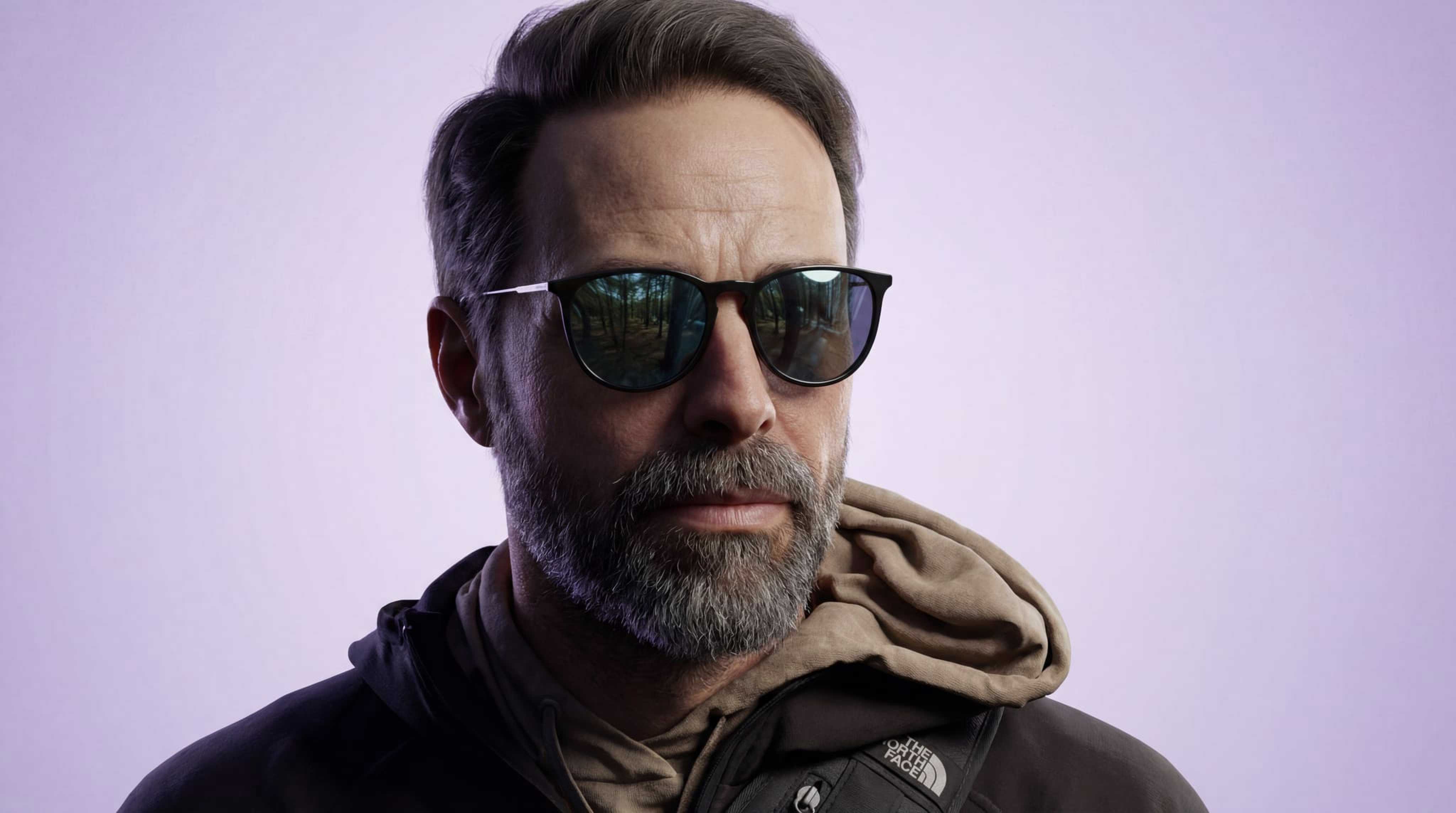
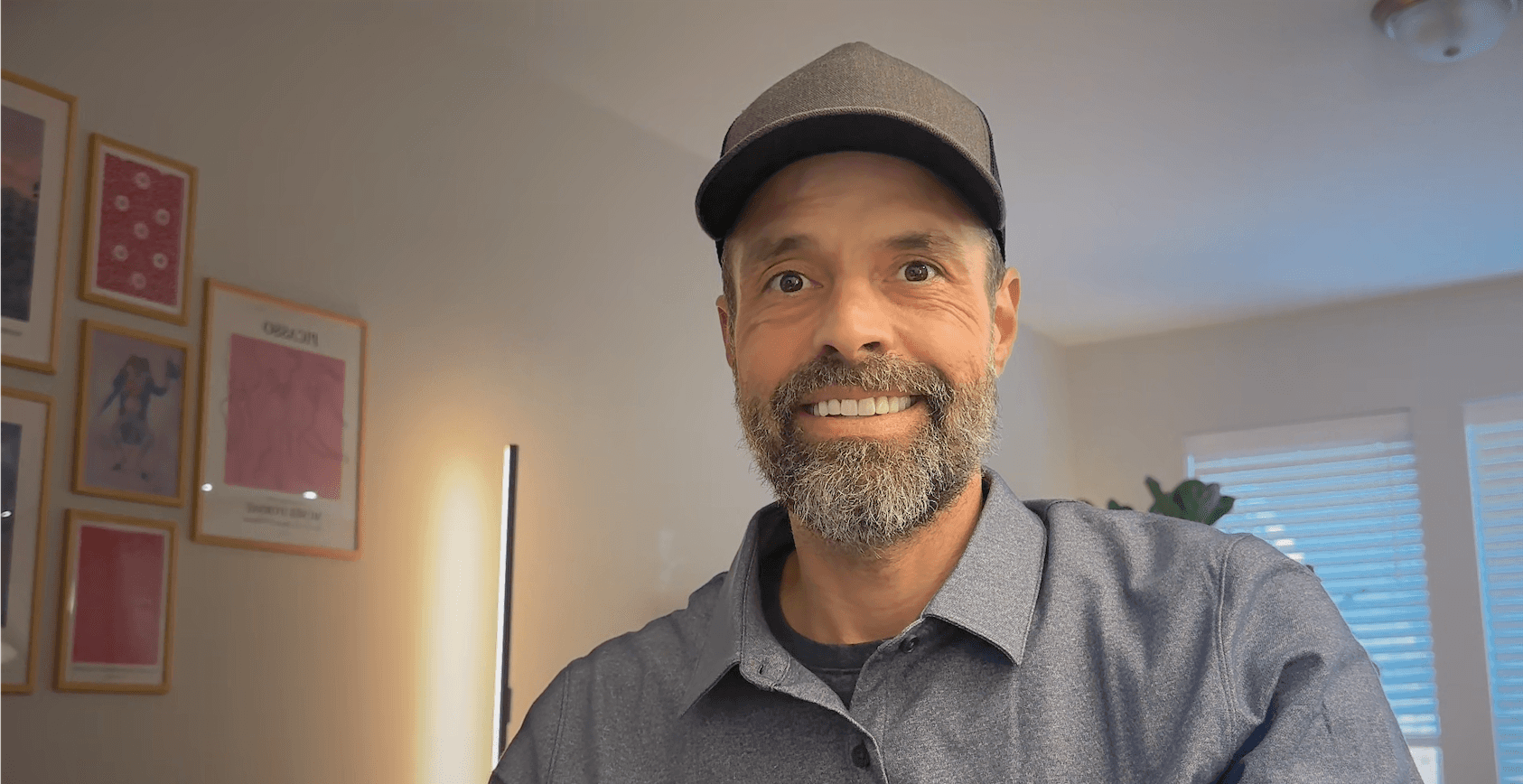
Court Kizer
I'm a human interface design engineer
who specialize in Artifical Intelligence.
I am a Product Designer who lives at the intersection of code and craft. With over 20 years of experience, I don’t just design static interfaces; I prototype in code to invent new interaction patterns for the AI era. While I have spent two decades crafting exceptional products, I am most energized by the unwritten future of agentic software.
I thrive in ambiguity. Whether designing for terminal interfaces, IDEs, or autonomous multi-step workflows, I focus on creating systems that are steerable, transparent, and deeply respectful of the user's expertise. My goal is to translate complex model capabilities into developer experiences that feel as predictable and polished as a Swiss watch.
You don't want a designer who only designs.
I'm part designer, part engineer, part data scientist, and part entrepreneur. Here's why that matters.
The title "Product Designer" can be a curse.
Job titles give people a false sense of security. When someone hears "Product Designer," they picture someone who draws pretty rectangles in Figma and hands off specs.
That's not enough anymore.
The traditional design process is broken. It's too slow for AI-speed iteration. By the time you've finalized your mockups, the model has changed, the requirements have shifted, and you're starting over.
You need someone who can go from idea to prototype to shipped code. Someone who doesn't just design the thing—they build it.
I'm not just a designer.
I'm part designer, part engineer, data scientist, problem solver, curious intellectual, and entrepreneur.
My mindset is to solve problems in an elegant way and have fun doing it. I want to take pride in what I build and have real growth as a person beyond just making money.
I don't want to be a specialist stuck in a niche. I've always worked at startups because I enjoy wearing multiple hats. Currently, I'm leading AI product design at Harvard Business School, where I've been defining UX architecture for AI-native products and building conversational interfaces from scratch.
Design + Engineering + Business Sense. In one person.
Work Timeline
20+ years of building
2024 - 2026
Lead Product Designer - AI/ML at Harvard Business School
Defined UX architecture for AI-native products. Built responsive, conversational AI interfaces from scratch. Integrated large-scale LLMs into user experiences.
2023 - 2024
Lead Product Designer at Wonderment
Designed and built an AI-powered CRM from scratch—data-driven dashboards, AI-powered filters, LLM-powered customer interfaces.
2022 - 2023
Lead Product Designer at Arist
Designed an AI-powered course builder for micro-learning with real-time AI feedback.
2022 - 2023
Director of Design at Narvar
Led 10+ designers. Launched 10+ features. Built a scalable design system across all applications.
2021 - 2022
Director of Product Design at Chartmetric
Shipped 40+ features. Revamped the dashboard. Increased revenue through design leadership.
2013 - 2021
Lead UI Designer & Design Engineer at SurveyMonkey
Built multiple applications from the ground up. Integrated NPS analytics into business software. Improved user satisfaction by 30%.
Business Mindset
I think like a founder, not just a designer.
A high ROI designer. Founders, an investment in a designer who does more than just design is a fantastic investment in your business.
I have experience being an entrepreneur and running my own businesses and side hustles ever since I was a kid. I've owned and built AI accounting software for Amazon sellers. I understand what it takes to bring revenue in and optimize flows to solve core problems.
The Good Luck Charm: Almost every startup I've joined has been acquired.
The small teams I've joined, especially smaller startups, end up getting bought for millions of dollars. I'm a good luck charm.
What This Means For You
When you hire me, you're not just getting a designer who makes things pretty. You're getting someone who:
- Understands revenue and business impact
- Knows how to work closely with data scientists
- Can identify and solve the core problem, not just the surface symptoms
- Takes ownership like a founder
Design Process
Process is a toolkit, not a religion
I'm fluent in design methodology - Double Diamond, Google Design Sprints, Jobs-to-be-Done, Amazon's Working Backwards. I've run user research, built personas, mapped journeys, and facilitated workshops.
But here's the truth: with AI, the process matters less than the output.
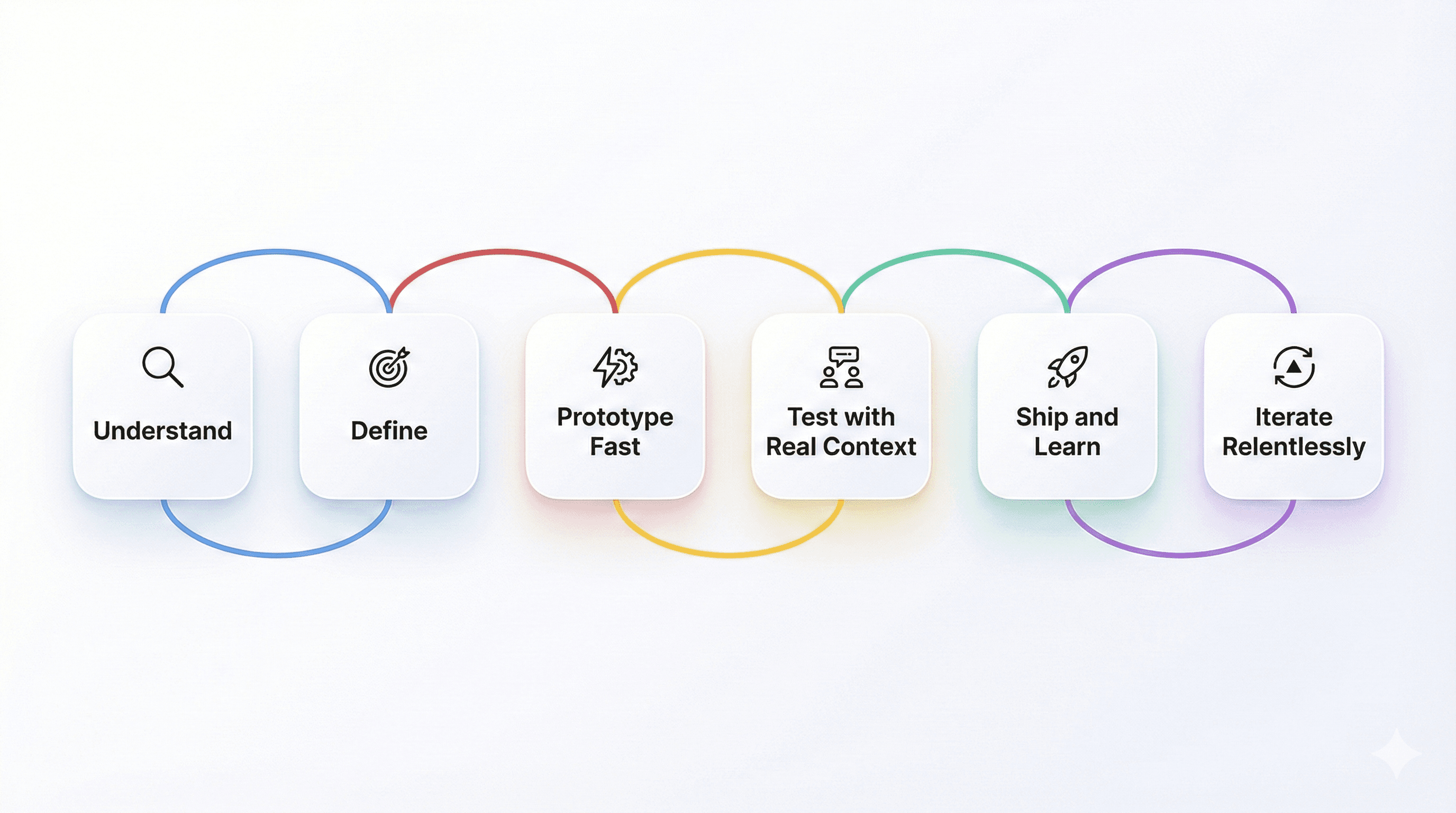
The traditional flow - research, define, ideate, prototype, test, iterate - assumed weeks of lead time between each phase. Now I can prototype a working concept in hours, test it with real users the same day, and iterate before lunch.
The frameworks taught me how to think. AI taught me how to move.
1
Understand
Conduct user research, competitor market analysis, research to deeply understand the problem, user needs, and context.
2
Define
Synthesize research findings to clearly articulate the problem statement, user personas, and project goals.
3
Sketch
Brainstorm and sketch a variety of ideas and solutions to explore different design directions.
4
Decide
Evaluate and prioritize ideas to select the most promising solution, ensuring alignment with user needs and goals.
5
Prototype
Create prototypes to explore functionality, usability, and design aesthetics, allowing for iterative testing.
6
Validate
Test prototypes with real users to gather feedback and ensure the solution meets user needs and solves the problem.
Understand
Absorb the problem space. Talk to users, study the data, audit the existing experience. This still matters - AI accelerates execution, not empathy.
Define
Frame the core problem. One sentence. If I can't articulate it clearly, I'm not ready to design.
Prototype Fast
Skip wireframes when possible. Go straight from sketches to interactive prototypes in code or high-fidelity tools. AI lets me explore 10x more variations in the same time.
Test with Real Context
Put it in front of users early. Not a polished deck - a working thing they can click, break, and react to.
Ship and Learn
Launch to a small cohort. Measure what matters. The best feedback comes from production, not usability labs.
Iterate Relentlessly
Design is never done. Every release is a hypothesis. Keep refining based on real-world signal.
What This Means for You
I don't worship process. I use it as a toolkit - picking the right methods for the problem at hand. Some projects need deep research upfront. Others need rapid prototyping and iteration. I know the difference, and I adjust.
The goal isn't a beautiful process artifact. It's software that works.
Am I a good fit for your business?
I thrive at early-stage startups building AI-native products. I prefer wearing multiple hats and working on problems where the roadmap isn't fully defined yet.
I'm interested in:
Design Engineering - Code-fluent designer who ships
Founding Designer - First design hire shaping the product from zero
Lead Product Designer - Senior IC with system-level thinking
Product Designer in AI - AI R&D, prototyping, and exploration
The right opportunity:
AI-native or AI-forward company
Small, ambitious team
Complex problems that need both design thinking and technical execution
Room to build, not just specify
Let's Talk
I'm currently exploring new opportunities. If you're building something ambitious with AI, I'd love to hear about it.
Contact me directly:
courtkizer@gmail.com
760-970-6981 (text/mobile)